United Kingdom · Traffic Commissioner A&D · reading only
Authorisation vs operating centre on A&D — spotting the wording
How to spot and distinguish operating-centre place/address wording from authorisation vehicle and trailer figures when both appear on a published Traffic Commissioner Applications & Decisions entry. Not licensing advice; not how to apply or vary; not public-inquiry advocacy.
The fuller field map (licence type, transport manager, status, objection clock) sits in how to read an A&D entry. Status words such as “application received” are covered in reading A&D status words. This page is narrower: keeping the centre and the numbers apart when you quote the page in front of you.
Two different printed fields
Weekly Applications & Decisions editions are collected on GOV.UK under Traffic Commissioner Goods Vehicle Applications and Decisions. House style varies by traffic area, but goods entries usually print both of these — and they mean different things:
- Operating centre — place/address wording for where vehicles are kept or operated as printed. Look for a line labelled Operating Centre: (sometimes more than one). Correspondence addresses and directors’ addresses are not the same thing as the OC.
- Authorisation — vehicle and trailer numbers (and similar capacity figures) as printed. Often something like “16 vehicle(s), 20 trailer(s)”. On a new application those figures are usually what is sought. On a variation they may be an increase or a change at a named centre. On a decisions line they may record what was granted or otherwise disposed of — still quote the wording; do not invent a grant the PDF omits.
Read the section heading first (new applications, variations, decisions, or similar). The same address and number lines change force under different headings — see also A&D status words and, for interim grants of centre or authorisation terms, interim wording on paper.
Common mix-ups
- Treating the centre address as an authorisation count — a street, industrial estate, or postcode is a place. It is not a vehicle or trailer number. Quote the address as place wording; quote the numbers as numbers.
- Reading authorisation without the centre — figures without the named centre (or centres) leave out half the published picture. If the PDF lists more than one OC, keep each centre with the figures that sit against it as printed.
- Assuming a published figure is advice to apply for more — a sought or recorded number on A&D is not a recommendation to increase fleet size, lodge a variation, or chase a higher authorisation. It is a reading of the public record for that named entry.
- Upgrading “sought” into “already authorised” — on an applications line, vehicle and trailer numbers are usually what is sought. Do not treat them as a fleet already authorised unless the same edition (or a later published decision) records a grant in those terms.
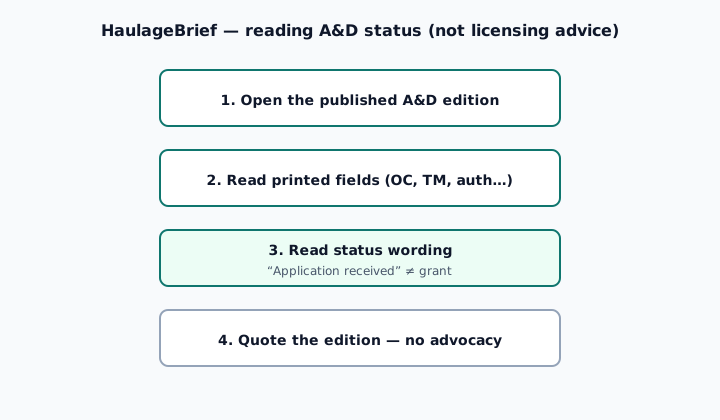
A short checklist for quoting the page in front of you
-
Open the named A&D edition on GOV.UK and find the operator entry.
-
Read the section heading before the operator line — applications, variations, decisions, or inquiry-related.
-
Copy the operating-centre wording as printed — address line(s), labels, and odd spacing (postcodes sometimes omit a space). Do not “correct” the record.
-
Copy the authorisation figures as printed — vehicles, trailers, and any similar capacity wording — without turning them into a place or into advice to apply for more.
-
Keep centre and numbers as two citations — if you quote the page to someone else, say both the place and the figures, and say whether the heading is applications, variations, or decisions.
-
Stay in the reading lane — no O-licence drafting, no variation drafting, no PI advocacy from this page.
Worked contrast · one live sample
East of England AD 5603 — GBRS HAULAGE LIMITED, OF2093787
SN application. Operating centre at Sunderland Hill, Ravensden — that is the place wording. Authorisation sought: 16 vehicles and 20 trailers — those are the capacity figures. Status in that edition: application received — not a grant. Use the sample as a reminder: quote the centre and the numbers separately, and do not upgrade sought figures into an authorised fleet.
Where written decisions fit
Public-inquiry written decisions are a different document type. They may still name centres and authorisation in findings or in the order — quote those terms as published, and keep them separate from weekly A&D application lines. See how to read a Traffic Commissioner written decision.
Stay in the reading lane
- Do not treat this page as how to apply for, vary, or surrender an operator’s licence.
- Do not treat a published figure as advice to increase authorisation.
- Do not treat an operating-centre address as a vehicle or trailer count.
- Do not treat this page as public-inquiry advocacy or O-licence drafting help.
What a £79 HaulageBrief PDF is (and is not)
You paste the public GOV.UK URL of a named A&D edition (or a named public-inquiry written decision) and name the operator if the PDF lists several. We send a PDF in 24 hours that states the operator, licence or application number, and licence type; cites the printed operating centre(s) and authorisation wording for that named entry; names the transport manager if printed; states the status of the item; cites the published wording; and records the objection deadline if that edition still prints one. If the publication is thin, the PDF says so. If we cannot read a public document, we refund. We do not invent centres, vehicles, or outcomes — and we do not draft applications or variations.
What it is not
- Not licensing advice. We do not tell you whether to apply, vary, object, or how to run the fleet.
- Not O-licence application writing. We do not prepare, lodge, or chase an application, variation, or newspaper notice.
- Not public-inquiry advocacy. We do not represent anyone before a Traffic Commissioner.
- Not TM CPC training, and not a substitute for reading the publication or instructing a transport consultant or solicitor.
See the East of England sample Order a £79 sourced reading
Questions
Is an operating-centre address the same as authorisation?
No. The operating centre is place/address wording for where vehicles are kept or operated as printed. Authorisation is the vehicle and trailer numbers (and similar capacity figures) as printed. Quote each field separately. HaulageBrief cites both as they appear on the named entry.
Does a printed vehicle/trailer figure mean I should apply for more?
No. A published figure is a reading of what that edition prints — often what is sought on an applications line, or what a decision records. It is not advice to apply, vary, or increase authorisation. We cite the wording; we do not draft applications or variations.
Is this licensing advice or how to apply for an O-licence?
No. This guide and the £79 PDF are sourced readings of public Traffic Commissioner publications. The Office of the Traffic Commissioner’s document remains the legal record. If you need advice, instruct a transport consultant or solicitor.
Will you write a variation or represent us at a public inquiry?
No. We do not prepare, lodge, or chase applications or variations, and we do not advocate, appear, or prepare a case. A written-decision brief is a reading of what was published, not representation. See the GOV.UK objections guide for official process information.
Who runs HaulageBrief?
Ellis Greensitt, sole trader, trading as HaulageBrief. English law. See terms and privacy. Email hello@haulagebrief.co.uk. No telephone.
Informational reading guide only. Sources: GOV.UK — Traffic Commissioner Goods Vehicle Applications and Decisions; HaulageBrief sample for East of England AD 5603, GBRS HAULAGE LIMITED OF2093787 (operating centre and authorisation sought as published). Public sector information reused under the Open Government Licence v3.0. Last reviewed Sep 2026. HaulageBrief is not the Office of the Traffic Commissioner and is not GOV.UK.