United Kingdom · Traffic Commissioner A&D · reading only · 22 September 2026
Vehicle and trailer specification figures on A&D — reading authorisation wording
How to read vehicle and trailer specification and authorisation figures — counts, labels such as “authorisation sought”, and per-centre breakdowns — on published Traffic Commissioner Applications & Decisions entries. Literacy only; not advice on fleet size or variation drafting.
Authorisation figures on A&D tell you how many goods vehicles and trailers the published entry associates with an operator line — usually as plain numbers, not as a vehicle specification sheet. The sibling guide authorisation vs operating centre on A&D explains why addresses and counts must stay separate. This page goes deeper on the numbers themselves: labels, sought vs granted wording, multi-centre splits, and common misreadings. For licence type (SN, SI, R), see SN, SI, Restricted codes; for the overall field map, see how to read an A&D entry.
Typical authorisation wording on goods A&D
Weekly goods-vehicle editions are published on GOV.UK under Traffic Commissioner Goods Vehicle Applications and Decisions. Most application lines include a block similar to:
- Authorisation sought: followed by vehicle and trailer counts — for example “16 vehicle(s), 20 trailer(s)”.
- Sometimes Authorisation: without “sought” on decision or licence-holder lines where the edition records what is held or granted.
- Occasionally separate lines for vehicles and trailers rather than one comma-separated phrase — quote the layout that edition uses.
These figures are capacity authorisation as printed on the operator-licence entry. They are not a list of registration marks, axle weights, or body types unless the same PDF prints those details (uncommon on standard weekly application lines).
“Authorisation sought” vs granted figures
On a new applications line, “authorisation sought” (or equivalent wording) usually means the edition is recording what the applicant seeks — not what is already on the licence. Pair that label with status words such as application received; receipt is not a grant. See reading A&D status words.
On a decisions line, figures may appear without “sought”, alongside granted, refused, or partially granted wording. Quote the decision text and numbers together. Do not copy sought figures from an earlier applications edition and present them as the current authorised fleet unless you are explicitly comparing two published documents.
On variation lines, authorisation figures may show an increase or decrease at a named centre — for example additional vehicles at an existing operating centre. Read whether the entry describes a change at one centre or a reallocation across centres. Variations that add a new centre may invite representations; see the 21-day objection clock if the entry prints an invite.
Vehicle count vs trailer count
A&D usually prints two integers — one for goods vehicles, one for trailers — as independent fields. More trailers than vehicles appears frequently; cite both as printed without advising on ratio. Zero trailers may appear where only vehicle authorisation is sought. Do not add vehicles and trailers into one “unit” figure unless the entry uses combined wording. Figures describe licence authorisation as printed — not rigid, drawbar, or specialist combination rules.
Per operating-centre authorisation
When an entry lists more than one operating centre, authorisation figures may appear once per centre or as totals with centre-specific breakdowns — layout depends on traffic area template. Reading steps:
-
Identify each operating-centre block — address wording first, as in authorisation vs operating centre.
-
Match figures to the centre they sit against — do not assume equal splits unless the PDF shows them.
-
Note the section heading — applications, variations, curtailments, or decisions change what the numbers signify.
-
Copy numerals and labels verbatim — including “vehicle(s)” / “trailer(s)” pluralisation and punctuation as printed.
-
Do not treat figures as advice to increase fleet size — published counts are the public record for that line, not a recommendation.
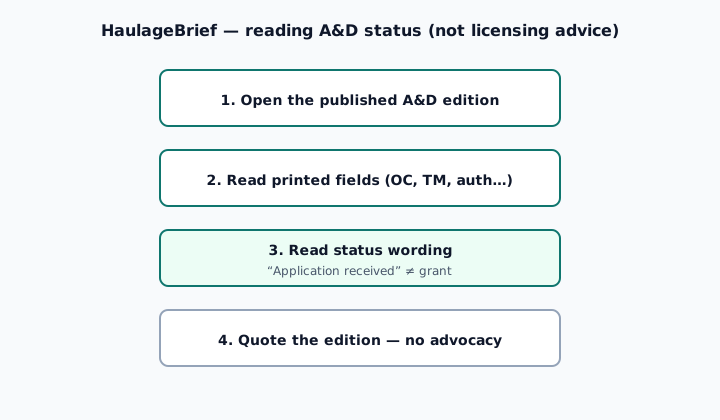
Worked example · authorisation sought on a live sample
East of England AD 5603 — GBRS HAULAGE LIMITED, OF2093787
Authorisation sought: 16 vehicle(s), 20 trailer(s) at Sunderland Hill, Ravensden — one centre, two separate counts, status application received. Trailers exceed vehicles on the printed line; that is a reading fact, not fleet advice. See the sample PDF for how HaulageBrief organises centre, figures, and status in one place.
Curtailment, interim, and other contexts
Under curtailment or revocation headings, figures may describe a reduction rather than a sought increase — see curtailment, revocation and suspension wording. Interim grants may restate figures temporarily — see interim wording on paper. Inquiry written decisions may restate authorisation in the order — see how to read a written decision.
Common misreadings to avoid
- Treating sought figures as the live fleet — on applications lines, numbers are usually sought until a decision says otherwise.
- Ignoring the label — “Authorisation sought” and “Authorisation” are different citations.
- Mixing centres — figures belong to the centre block they are printed against.
- Searching for VINs or specs — standard application lines rarely list vehicle specifications.
See the East of England sample Order a £79 sourced reading
Questions
Does “16 vehicle(s), 20 trailer(s)” mean that fleet is already authorised?
On a new applications line labelled Authorisation sought, those figures describe what is sought as printed — not an authorised fleet unless a decisions line records a grant. Always read section heading and status.
Why can trailer authorisation exceed vehicle authorisation?
Published entries often print separate counts. HaulageBrief cites both as printed. We do not advise whether that split suits your operation.
Where are vehicle specifications (weight, type) on A&D?
Standard weekly application lines usually print authorisation counts only — not registration marks or technical specs. If the PDF omits specs, we say so rather than importing detail from elsewhere.
Will you help me apply for more vehicles?
No. We do not draft O-licence applications or variations. We read and organise one named published entry or written decision.
Is this licensing advice?
No. This guide and the £79 PDF are sourced readings of public Traffic Commissioner publications. If you need advice, instruct a transport consultant or solicitor.
Who runs HaulageBrief?
Ellis Greensitt, sole trader, trading as HaulageBrief. English law. See terms and privacy. Email hello@haulagebrief.co.uk. No telephone.
Informational reading guide only. Sources: GOV.UK — Traffic Commissioner Goods Vehicle Applications and Decisions; HaulageBrief sample for East of England AD 5603, GBRS HAULAGE LIMITED OF2093787 (authorisation sought 16 vehicles, 20 trailers as published). Public sector information reused under the Open Government Licence v3.0. Last reviewed 22 September 2026. HaulageBrief is not the Office of the Traffic Commissioner and is not GOV.UK.